Serengeti Safari: Africa’s great migration & Big Five
Feeling lost in a sea of safaris that promise lots of adventure ? The serengeti national park safari delivers more than the Big Five : you will be surrounded by animals and witness wonderful landscape full of colours. Every year, during the Great Migration, more than one million of wildebeest plunge through crocodile infested waters, and lions claim kopjes like ancient thrones. Here, endless plains meet acacia forests. Watch cheetahs scanning grasslands from termite mounds, or join a sunrise balloon ride to see herds paint the horizon. This is where raw nature and cultural depth collide—every game drive teaches resilience, every encounter redefines your bond with the wild. Ready to chase horizons that don’t just thrill, but transform?
Why the Serengeti is more than just a safari destination
When you first set foot on the endless plains of the Serengeti, the horizon stretches beyond imagination: golden grasses, scattered acacia trees, and endless skies. Here, the Maasai word “siringet” comes alive, meaning “the place where the land runs forever.” Serengeti National Park is Africa’s most iconic safari destination due to the Great Migration, its Big Five, and its timeless wilderness. This is where nature reigns, and visitors become part of a story millions of years in the making.
Picture 1.5 million wildebeests thundering across the plains, evading crocodiles in the Mara River. Imagine lions stalking antelope under leopards’ watchful gaze on granite kopjes. This is the type of safari that reveals nature’s raw beauty at every sunrise. The park got UNESCO status in 1981 and welcome each year 350,000 visitors.
Beyond the migration, the Serengeti shelters Africa’s largest predator populations. Over 3,000 lions, 7,500 hyenas, and 250 cheetahs thrive here. The park’s 5,000 elephants and fewer than 70 critically endangered black rhinos symbolize conservation resilience. Granite kopjes—ancient rock formations—serve as leopard hideouts and refuges for rare species like the rock hyrax. This ecosystem, shaped by volcanoes and timeless rhythms, invites travelers to witness life’s grandest spectacle. Ready to discover why this serengeti national park safari is unmatched? Let’s begin.
Witness the great migration
The endless cycle of life
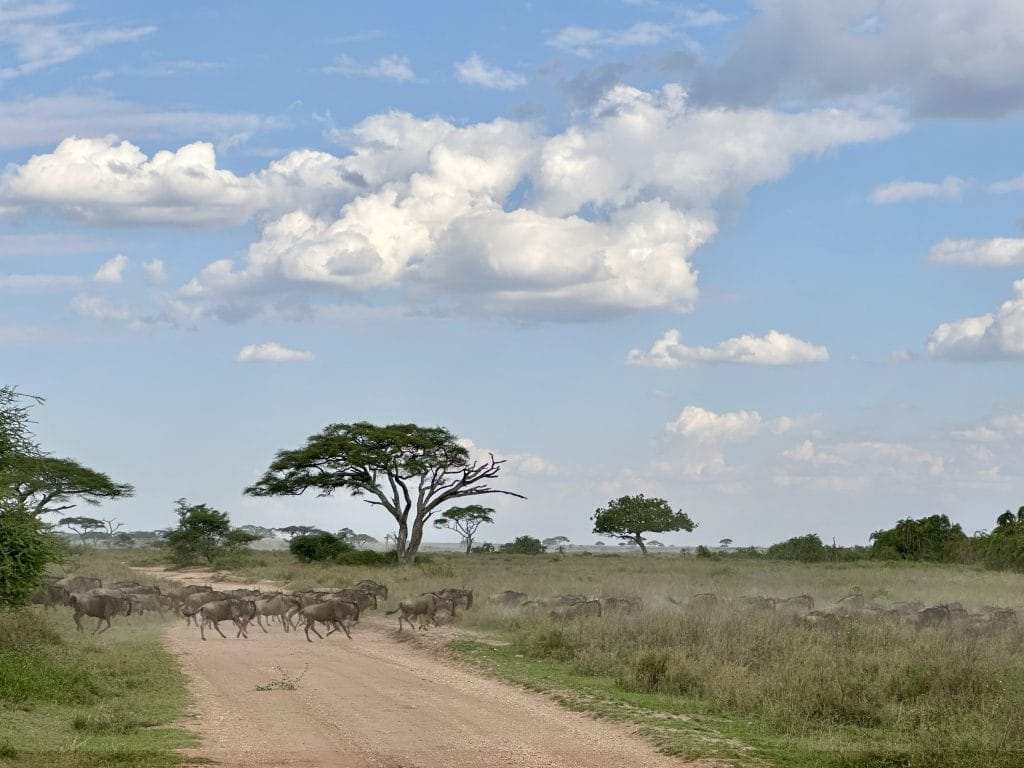
Imagine a landscape where over 1.5 million wildebeest stampede across the plains. This is the Great Migration – a relentless 800km loop driven by instinct and rainfall. Each year, these herds are joined by hundreds of thousands of zebras and Thomson’s gazelles, creating a spectacle that defines the Serengeti’s wild soul.
Between January and March, the southern Serengeti becomes a nursery. Half a million wildebeest calves are born in just three weeks, their wobbly first steps a testament to survival. Predators lurk, but the sheer numbers overwhelm – a strategy honed over millennia. As rains fade, the herds surge northward, following the greener pastures that seasonal rains promise.
This isn’t a single event; it’s a 365-day drama. By May, the masses reach the Grumeti River, where crocodiles lie in wait. By July, they brave the Mara River’s crocodile-infested waters. Around 250,000 wildebeest and 30,000 zebras perish annually, yet the cycle endures. Their journey isn’t just survival – it’s a raw celebration of life’s tenacity.
The drama of the river crossings
The Mara River crossing is nature’s ultimate cliffhanger. Picture thousands of wildebeest hesitating on the banks, their bodies tense with primal dread. Suddenly, one leaps. Chaos erupts as the herd surges forward, a wall of fur and foam battling currents that drag the weak under. Crocodiles strike silently from below, while lions stalk the opposite shore, waiting for the exhausted survivors.
These crossings aren’t just dangerous; they’re heart-stopping. In 2023, a National Geographic documentary captured images on 10,000 wildebeest plunging into the water over 48 hours. Some drown in hidden sinkholes; others escape only to collapse from exhaustion. Yet this brutality sustains the ecosystem : scavengers feast, and nutrients feed the soil.
For travelers, witnessing this moment is transformative. You’ll hold your breath as a calf struggles against the current, cheer as it reaches safety, and marvel at the raw power of nature. You will witness the nature reality, unpredictable and unforgettable. Book your safari between July-October for front-row seats, but be prepared to wait; patience rewards you with nature’s most authentic storytelling.
A kingdom of predators and giants: spotting the big five and beyond
Home of the legendary big five
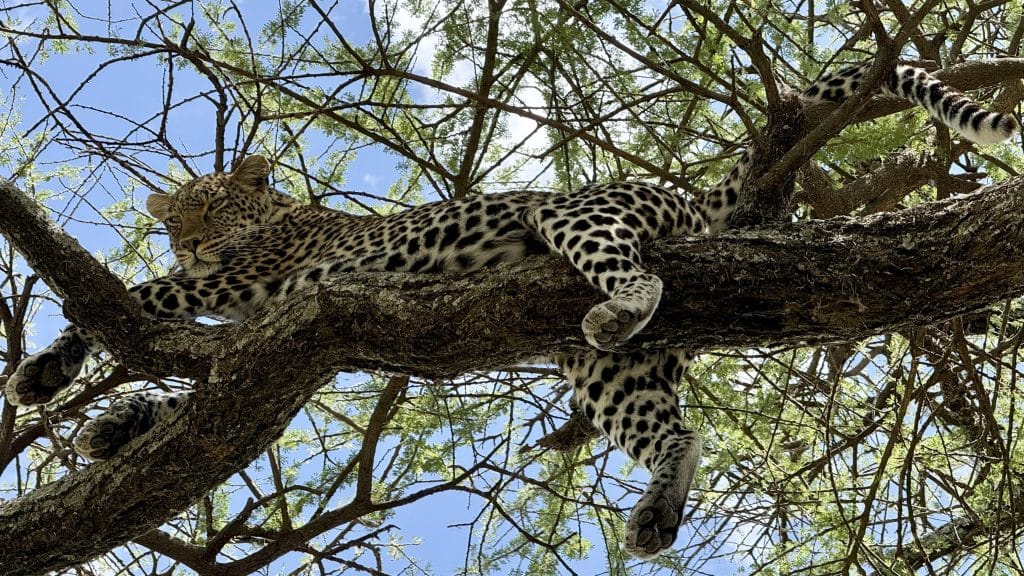
Picture yourself scanning the golden Serengeti plains as a lion pride lounges on a rocky kopje, their silhouettes stark against the horizon. This is your front-row seat to Africa’s most thrilling wildlife drama. The Serengeti hosts over 3,000 lions—the densest population on Earth—often spotted in the central Seronera Valley at dawn or dusk. Keep your eyes skyward for elusive leopards, whose dappled coats blend seamlessly with acacia branches, especially in the Moru Kopjes where they stash kills in tree forks.
Witness the slow, deliberate movements of elephants as they traverse the park’s riverine forests, with herds crossing the Mara River. Though rarer, the black rhino—now over 70 individuals thanks to conservation efforts—can be glimpsed in the Moru Kopjes. Rangers protect these critically endangered creatures here. Don’t miss the thunderous approach of buffalo herds, with over 50,000 roaming the grasslands. These buffalo dominate watering holes, their curved horns clashing in dominance displays.
More than just the big names
While the Big Five steal headlines, the Serengeti’s supporting cast dazzles equally. During your game drives, you might encounter:
Cheetahs using termite mounds as natural observation towers, scanning for gazelle
Giraffes stretching skyward as they navigate acacia thickets in graceful herds
The unmistakable spotted hyena clans—7,500 strong—haunting the plains at dusk, their haunting calls echoing across the plains
more than 500 bird species, from martial eagles soaring above to lilac-breasted rollers flashing iridescent colors in acacias
Rare African wild dogs, recently returned to the ecosystem after decades of absence, spotted in the western corridor
Every dy and drive deliver its own surprises. Will you catch a serval’s acrobatic leap at sunrise? Spot the elusive aardwolf’s nocturnal foraging? The Serengeti guarantees new stories daily.
The endless plains: a landscape that shapes the Safari
Imagine a sea of golden grass stretching to the horizon, interrupted only by scattered granite outcrops that rise like ancient sentinels. This is the Serengeti’s southern plains, where the Great Migration’s drama unfolds. Derived from the Maasai word “siringet” meaning “endless,” these vast, treeless expanses set the stage for one of nature’s most awe-inspiring spectacles. Here, the migration’s 1.5 million wildebeest and 250,000 zebras move in rhythm with the seasons, creating a living, breathing ecosystem.
Granite whispers: Kopjes as wildlife havens
Kopjes (granite formations aged 550 million years) dot the plains, offering shade and shelter. These rocky islands are microhabitats for species like the rock hyrax, klipspringer antelope, and Verreaux’s eagles. Lions often laze atop them, scanning for prey, while leopards use their dappled shadows to vanish from view. Did you know? Kopjes sustain life even in droughts, their crevices storing moisture that feeds roots of fig trees, creating vital oases.
Beyond the golden horizon: diverse regions
while you will travel towards the noth, you will observe that the terrain transforms. The Western Corridor’s Grumeti River snakes through woodlands, a critical lifeline for migrating herds braving crocodile filled waters. Further north, the Serengeti’s wooded hills and valleys offer solitude—fewer crowds, more intimacy. These regions aren’t just backdrops; they dictate the migration’s path and where you’ll spot the Big Five. A 2024 study confirmed that 85% of lion sightings occur near kopjes, proving the landscape’s role in shaping wildlife encounters.
The Serengeti’s geography is an active player. Its plains guide migrations, its rivers test survival, and its remoteness preserves authenticity. To experience it fully is to understand why 350,000 annual visitors return with stories etched into their souls. This isn’t just a park; it’s a living canvas of Africa’s wild heartbeat.
Planning Your Dream Serengeti National Park Safari
When is the best time to visit?
Curious about timing your visit perfectly? The Serengeti’s magic shifts with the seasons. Let’s break down what matters most:
Serengeti Seasons: A Year-Round Guide
Season
Months
Migration Location
What to Expect
Calving Season
January – March
Southern Serengeti / Ndutu
Over 500,000 wildebeest calves born in 2-3 weeks. Predator action peaks. Lush green plains.
Long Rains
April – May
Central / Western Corridor
20% lower prices. Dramatic thunderstorms. Muddy tracks challenge game drives.
River Crossings
June – October
Western Corridor & Northern Serengeti
Prime wildlife viewing. 200+ crocodile attacks daily at Grumeti River. Dry season grass height drops from 2m to 30cm.
Short Rains
November – December
Moving South via Central Serengeti
fewer tourists. Over 500 bird species visible.
Missing July’s Mara River crossings means losing 80% of travelers’ top photo opportunities. Will you risk it? Watching wildebeest battle 6m crocodiles in a life-or-death river plunge costs nothing extra—but it’s gone in 120 seconds.
What kind de safari experience are you looking for?
Choose your adventure style from these unforgettable options:
Classic Game Drives: Morning/evening 4×4 drives with expert guides spotting the Big Five. 78% of visitors start here. Pro tip: Ask for early access to prime spots—rangers open gates an hour before official time.
Hot Air Balloon Safaris: 1-hour sunrise flights over 1.5M migrating wildebeest. Includes champagne breakfast in the bush. 92% of guests say this “topped the wildlife sightings”.
Walking Safaris: Track lion prints with armed rangers in private concessions. 90% of travelers say this feels “most alive”. Feel the crunch of acacia leaves underfoot while learning plant survival tricks from guides.
Luxury Lodges vs. Mobile Camps: Permanent lodges average $600/night. Migration camps move 6x/year for front-row views. Mobile camps include exclusive night game drives (prohibited in the main park).
How to connect with local culture responsibly
Over 300,000 annual visitors now include cultural experiences. The Serengeti’s heart beats through its people:
When visiting Maasai bomas, you’ll discover communities where:
Traditional manyattas (huits) use cow dung and sticks
Young morans (warriors) perform 2m high jumps
Women sell intricate beadwork supporting 80% of local households
Track with bow-and-arrow hunters (90% success rate). Watch them mimic animal calls to sneak up on prey.
Share honey with the bird-whisperers who guide to hives. Their honeyguide birds lead them to nests—then share the spoils.
Learn survival skills from Africa’s last true hunter-gatherers. Their clicks language predates Swahili by 40,000 years.
Remember: 75% of tourism income now directly supports community projects. Your visit creates real impact—like the 12 new schools built near Hadzabe areas since 2020.
Understanding the value: why a Serengeti safari is a worthy investment
Let’s address the elephant in the room: safaris in the Serengeti aren’t cheap. But ask yourself—what’s the price of witnessing a million wildebeest thundering across the plains at sunset? Of hearing a lion’s roar echo through the savanna as dawn breaks? These moments aren’t just photos; they’re memories etched into your soul. So, why does this experience command such a premium?
Conservation & Park Fees: Every dollar spent here becomes a lifeline. Over 30% of your safari cost funds anti-poaching patrols, habitat restoration, and UNESCO World Heritage protections. Your visit directly safeguards the Serengeti’s future.
Exclusivity And Logistics: The Serengeti’s remoteness isn’t a drawback—it’s the reason you’ll wake to sunrise views uninterrupted by crowds. High logistical costs ensure expert guides, 4×4 vehicles built for rugged terrain, and eco-lodges designed to blend with the wilderness.
Avoiding Crowds: Sky-high prices aren’t just about luxury—they’re a gatekeeper. Fewer visitors mean no traffic jams during the Great Migration. Imagine watching crocodiles ambush a river crossing… in silence, save for the thunder of hooves.
A Priceless Experience: Can you put a value on standing atop a kopje as the Big Five roam below? Or sipping sundowners while zebra herds silhouette against the sky? This isn’t a “trip”—it’s a chapter in your life story.
Yes, this is a splurge. But it’s a splurge that fuels conservation, empowers local communities, and guarantees you’ll never forget the moment a leopard materializes from a tree above your tent. Isn’t that worth more than a generic beach vacation? The Serengeti doesn’t just sell safaris—it sells legacy.
Your unforgettable Serengeti adventure awaits
Picture yourself on the Serengeti’s endless plains as over 1.5 million wildebeest surge across the Mara River, flanked by zebras in a cloud of dust. This is the Great Migration—a rhythm of life unchanged for millennia.
The Big Five wait around every corner. Lions nap under acacia trees, leopards melt into kopje shadows, and elephants dust themselves in the golden sunrise. Here, nature writes the rules.
Yet beyond the wildlife, it’s the landscapes that steal your breath. Rolling grasslands stretch into eternity, interrupted only by ancient rock formations and acacia silhouettes.
Ready to answer the call? The Serengeti isn’t just a destination—it’s a living story of survival, beauty, and balance.
Whether you dream of witnessing the river crossings or meeting Tanzania’s fascinating tribes, we can help you craft the perfect journey. Explore our tours or contact us to start planning your adventure today. The Serengeti is waiting for you!
The Serengeti is more than a safari—it’s a living masterpiece where the Great Migration unfolds, the Big Five reign, and timeless landscapes stir the soul. This once-in-a-lifetime journey isn’t just a checklist; it’s a story waiting for you. Ready to write yours? Explore our tours or contact us to begin. The Serengeti’s magic is calling.
To provide the best experiences, we use technologies like cookies to store and/or access device information. Consenting to these technologies will allow us to process data such as browsing behavior or unique IDs on this site. Not consenting or withdrawing consent, may adversely affect certain features and functions.
Functional
Always active
The technical storage or access is strictly necessary for the legitimate purpose of enabling the use of a specific service explicitly requested by the subscriber or user, or for the sole purpose of carrying out the transmission of a communication over an electronic communications network.
Preferences
The technical storage or access is necessary for the legitimate purpose of storing preferences that are not requested by the subscriber or user.
Statistics
The technical storage or access that is used exclusively for statistical purposes.The technical storage or access that is used exclusively for anonymous statistical purposes. Without a subpoena, voluntary compliance on the part of your Internet Service Provider, or additional records from a third party, information stored or retrieved for this purpose alone cannot usually be used to identify you.
Marketing
The technical storage or access is required to create user profiles to send advertising, or to track the user on a website or across several websites for similar marketing purposes.