If you have ever been curious about what humanity’s original diet looked like—long before grocery stores and fast food, step into the world of the Hadzabe tribe!
They have been thriving in harmony with nature for over 40,000 years. Their daily menu is as wild as the land itself: game hunted with handmade bows, sweet honey gathered high from ancient baobab trees, and nourishing roots and tubers unearthed by expert foragers. You’ll discover how their seasonal feasts – meat-rich dry seasons and honey-laden wet seasons – reveal gut health secrets scientists are racing to understand. We’ll show how this ancient lifestyle, now threatened by modern expansion, offers modern travelers a living classroom in sustainability and resilience.
A taste of the past: discovering the Hadzabe tribe diet
The Hadzabe tribe begins their day as they have for 40,000 years. At sunrise, hunters sharpen their arrows while women prepare to gather tubers and berries. This is one of Africa’s last true hunter-gatherer communities, surviving entirely on what the savanna provides.
For the Hadzabe, food isn’t bought or grown : it’s found. Men hunt using poison-tipped arrows or dig into burrows for rodents, while women and children collect baobab fruits and starchy roots. Honey, prized like gold, is harvested from tree trunks by nimble climbers. They consider food as the foundation of health. Research shows their gut microbiomes are among the most diverse on earth, offering protection against many modern illnesses. Remarkably, just three days on a Hadza-inspired diet can increase gut bacteria diversity by up to 20%, unlocking insights into human evolution and nutrition that science is only starting to uncover.
Yet this ancient lifestyle faces threats. Shrinking territories push them toward processed foods, risking both cultural identity and ecological wisdom. Visiting their camps offers travelers a rare chance to witness how humanity thrived long before supermarkets, through a diet as dynamic as the landscape itself.
The Cornerstones of the Hadzabe plate: meat, honey, and plants
In Tanzania’s savanna, the Hadzabe tribe survives on a dynamic diet of meat, honey, and plants. These three pillars ensure balance in their hunter-gatherer lifestyle.
Food Category
Key Examples
Primary Provider
Nutritional Role
Meat (Nama)
Baboon, porcupine
Men (Hunters)
Protein, fat, nutrients
Honey (N/ate)
Wild honey, larvae
Men (Hunters)
Carbs, high-energy calories
Plants (K’a)
Tubers, berries
Women (Foragers)
Fiber, vitamins, carbs
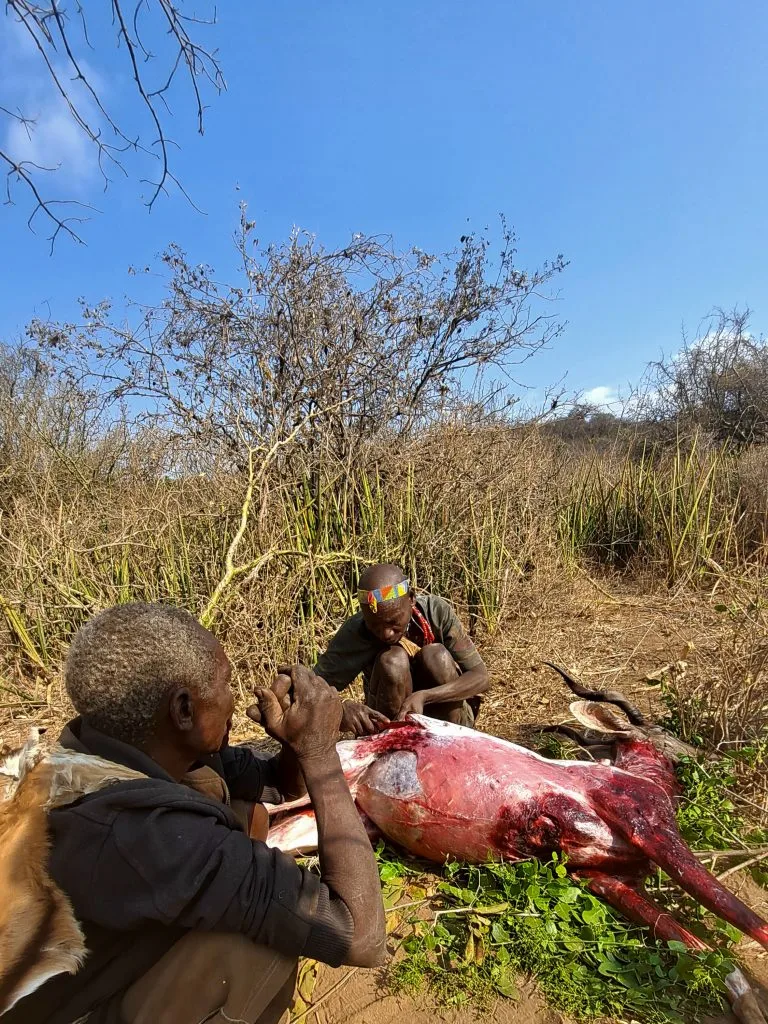
Meat is shared equitably after hunts using bows and arrows. Organ meats like liver are eaten immediately, while other cuts are divided among the group.
Honey, called “liquid gold,” provides up to 20% of calories. Men harvest it from baobabs with honeyguide birds, sharing wax as payment.
Plants, gathered by women and children, include tubers for fiber and baobab fruit for vitamin C. These ensure nutrition during lean seasons.
This trio sustains their lifestyle. However, modern threats like land encroachment and processed foods now challenge their ancestral balance.
The great Hadzabe hunt: more than just a meal
The art of The bow and poisoned arrow
Watching Hadzabe hunters craft their weapons reveals centuries of survival wisdom. They select Mutateko wood for bows, shaping each by hand until its curve matches their outstretched arms. The real secret lies in their poison: a sticky black paste made by boiling Adenium boehmianum sap. This potent toxin, harmless to humans when cooked, paralyzes prey within hours. Hunters test its strength by tasting drops of the animal’s blood – if it burns bitter, the poison’s grip is strong.
A diverse and opportunistic menu
Their diet reads like a savanna’s census. While zebras and wildebeests make headlines, Hadzabe survival hinges on smaller quarry: porcupines dug from burrows, baboons tracked through acacia trees, and dik-diks brought down with precision shots. Even scavenged meat gets used – nothing wastes. During dry seasons, protein comes from birds and reptiles. This adaptability creates a nutritional balance rare in modern diets, blending lean meats with wild tubers and antioxidant-rich baobab fruits. Seasonal knowledge ensures year-round sustenance, with techniques like roasting tubers in ashes or fermenting baobab pulp into drinks.
A communal feast: sharing and rituals
Success belongs to everyone. When a hunter returns, the camp erupts in song, but the real magic happens at dusk: the kill gets divided equally among all families. No one asks who deserves what – it’s simply shared. Hunting leaders are granted a unique honor, as they are given the first taste of nutrient-rich organs (liver, seared swiftly …). This ritual is a quiet tribute to mastery and respect. Visitors can experience this tradition on a Hadzabe hunting expedition, where timeless survival skills unfold before modern eyes. By consuming every edible part of an animal, from marrow-rich bones to organ meats, the Hadzabe minimize waste.
Foraging in the bush: a woman’s expertise
While Hadzabe men track game across the savanna, women ensure daily meals through expert foraging. Their knowledge of seasonal plants and sustainable harvesting supports the tribe year-round. This division of labor maintains dietary balance and ecological harmony.
Digging for treasures: the essential tubers
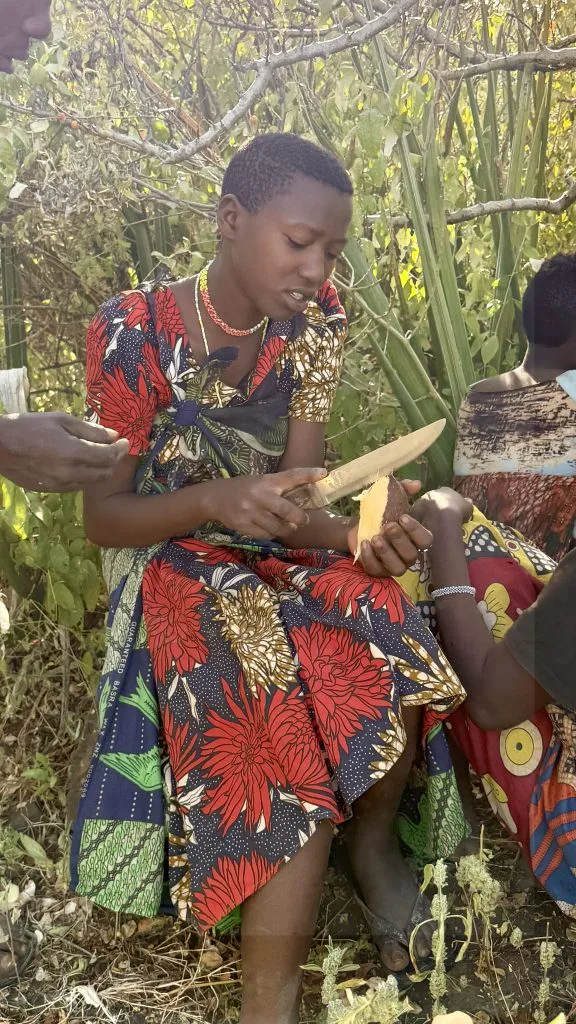
Armed with digging sticks, women locate Wild Sweetpea (Vigna frutescens, called ekwa) by its silver-green vines. They strike the earth, listening for hollow sounds that reveal tubers buried 30-50cm below. Extracting these roots demands skill—breaking them wastes food. Once unearthed, they roast tubers over fires, peeling charred skin to reveal yellow flesh. Cooking neutralizes toxins, making this calorie-dense food a reliable staple when hunting yields little.
Looking for berries, baobab or wild fruits
Hadza women recognize more than 50 edible plants, from roots to wild fruits. Among them are the sweet Kongolobe berries, enjoyed fresh as a natural snack. After savoring the pulp, they scatter the seeds back into the earth, an effortless act of replanting that sustains future harvests. During dry seasons, they harvest baobab fruit pods. The tangy pulp, rich in vitamin C and fiber, mixes with water for a refreshing drink. Grewia and Cordia fruits add seasonal micronutrients.
Tubers (like ‘ekwa’ or ‘shumuko’): A reliable source of carbohydrates, cooked over the fire.
Berries (like Kongolobe): Eaten fresh off the bush, providing quick energy and vitamins.
Baobab Fruit: the seeds are coated in a dry, tangy powder mixed with water to make a nutritious drink.
Wild fruits: depending on what can be found in the bush
A diet dictated by the seasons
For the Hadzabe tribe in Tanzania’s savanna, food isn’t static—it’s a rhythm shaped by seasons. Their survival depends on reading environmental shifts, turning the land into a dynamic pantry. This adaptability isn’t just practical—it’s woven into their identity.
The dry season: a time for meat and tubers
From May to October, the Hadzabe become expert hunters. Sparse vegetation concentrates animals like zebra and warthogs around waterholes. Men track them using bows and natural poison, sharing meat equitably—a cultural cornerstone. Organs like heart and liver are roasted immediately; carcasses return to camp for distribution.
Women and children gather starchy tubers during these months, cooking them to ease digestion. Combined with meat, these foods provide essential calories when plant resources are scarce.
The wet season: a bounty of berries and honey
November’s rains transform the landscape. The Hadzabe pivot to foraging: baobab fruits (rich in vitamin C) become drinks, while berry bushes offer endless snacks. Honey, harvested from treetop hives, can supply 15-20% of daily calories.
This season sees “months without meat.” Animals scatter, but berries and honey flourish. Children collect baobab pods; women dig tubers year-round. Though lower in protein, this plant-heavy diet delivers 100g of fiber daily—six times Western intake—supporting the world’s most diverse gut microbiome.
Dry Season (June-Oct): Meat (zebra, warthog) and fibrous tubers dominate.
Wet Season (Nov-May): Honey, baobab fruits, and berries like Grewia take priority.
Their seasonal shift isn’t just survival—it’s ecological wisdom. By cycling between hunting and foraging, the Hadzabe protect resources. Their diet offers a blueprint for sustainable eating, proving ancient practices hold lessons for modern food systems.
The Hadzabe gut: a lesson in health from our ancestors
A unique diverse microbiome
The Hadzabe of Tanzania host the most diverse human microbiome ever recorded. Scientific studies reveal their intestinal bacteria adapt to seasonal foraging rhythms, directly linking this diversity to remarkably low rates of chronic diseases like type 2 diabetes and cardiovascular issues.
What can explain this, is their diet, bursting with fibrous plants and wild foods. Tubers, baobab fruits, and honey nourish gut flora absent in Western populations. During dry seasons, their microbiome gains complexity, while wet seasons trigger shifts in Prevotellaceae bacteria tied to berry consumption. The absence of Bifidobacterium—a probiotic common in industrialized diets—highlights their unique adaptation to a plant-rich, dairy-free lifestyle.
Debunking the “paleo” myth: the real ancestral diet
Contemporary “paleo” diets often celebrate plates piled high with meat. Yet among the Hadzabe, true ancestral eating is far more balanced. Their meals blend hunted game with wild fruits, honey, and nutrient-rich tubers, reflecting a flexible approach shaped by the seasons rather than strict rules. This contrast highlights how modern interpretations simplify what, for the Hadzabe, is a complex and sustainable way of life. Their traditional diet is mostly based on plants. Tubers rich in resistant starch, baobab fruit (a vitamin C powerhouse), and honey as 15% of calories prove carbs and fiber were ancestral staples.
Seasons dictate their meals. During dry months they can eat more meat as game concentrates around waterholes. Wet seasons bring honey bonanzas—nature’s energy bomb with 3,600 kcal/kg. This nutritional composition dismantles the “caveman steak” stereotype, showing humans thrived on plant diversity, not just protein. Men scale baobabs up to 15 meters for honey, while women gather tubers and low-shrub honey. Their cooking methods—roasting tubers or fermenting baobab into drinks—unlock nutrients critical for survival.
Their microbiome mirrors this flexibility. Bacteria like Treponema help women digest tubers, while men’s guts adapt to seasonal meat surges. Even their hunting methods reflect sustainability: poison-tipped arrows, crafted from Adenium coetaneum, ensure no resource goes to waste. This isn’t a rigid “paleo” template—it’s a dynamic, sustainable system honed over 40,000 years, offering lessons for modern diets.
How you can responsibly experience the Hadzabe way of life
When visiting Tanzania’s savanna ecosystem, you’ll discover a way of life sustained by the Hadzabe for millennia. Their traditional diet, adapted to seasonal changes, offers profound lessons in sustainability through foraging tubers, berries, and baobab fruits, plus protein from game animals.
What makes their food culture remarkable is complete resource utilization. When hunters return with meat, you’ll witness communal sharing ensuring no one goes hungry. As you walk with gatherers, you’ll learn to identify edible roots and the unique call used to communicate with honeyguide birds for honey collection.
Eat when you are hungry: they don’t have set meal times. Eating is opportunistic.
Sharing is paramount: Large kills like meat and honey are always shared with the entire camp.
Nothing is wasted: Every part of an animal or plant is used, reflecting a deep respect for nature.
For a meaningful encounter, choose a respectful and authentic cultural visit to Lake Eyasi. Here, you’ll connect with traditions that have endured for millennia while directly supporting the Hadzabe community. you will witness how the rhythm of their days is guided by the shifting abundance of seasonal foods. As agriculture and modern development encroach on their ancestral lands, ethical tourism becomes vital.
By choosing ethical cultural experiences, like authentic engagement, we help preserve this irreplaceable heritage. Their story teaches that true nourishment lies in respecting nature and protecting traditions that enrich both people and planet.
To provide the best experiences, we use technologies like cookies to store and/or access device information. Consenting to these technologies will allow us to process data such as browsing behavior or unique IDs on this site. Not consenting or withdrawing consent, may adversely affect certain features and functions.
Functional
Always active
The technical storage or access is strictly necessary for the legitimate purpose of enabling the use of a specific service explicitly requested by the subscriber or user, or for the sole purpose of carrying out the transmission of a communication over an electronic communications network.
Preferences
The technical storage or access is necessary for the legitimate purpose of storing preferences that are not requested by the subscriber or user.
Statistics
The technical storage or access that is used exclusively for statistical purposes.The technical storage or access that is used exclusively for anonymous statistical purposes. Without a subpoena, voluntary compliance on the part of your Internet Service Provider, or additional records from a third party, information stored or retrieved for this purpose alone cannot usually be used to identify you.
Marketing
The technical storage or access is required to create user profiles to send advertising, or to track the user on a website or across several websites for similar marketing purposes.