Essential visa, money & transport tips for tanzania travel
Feeling overwhelmed by Tanzania’s visa rules, currency quirks, and transport choices? Don’t worry, this guide turns tricky details into smooth planning.
Visas: Skip long airport lines by applying online through the e-Visa system. Remember that some U.S. travelers need a $100 multiple-entry visa, while many Europeans get a 90-day visa.
Money: Master the “two-currency dance”-use Tanzanian shillings (TZS) for local markets and meals, and U.S. dollars (USD) for lodges or park fees. Pro tip: only bring USD bills printed after 2009, as older ones are often refused.
Transport: For local flavor, try a dala-dala minibus; for comfort, rely on private 4x4s for game drives. On the coast, hop on a Zanzibar ferry or take a bush plane to reach the islands with ease.
With the right prep, your safari begins stress free: unforgettable sunsets over the savannah, sipping chai with Maasai guides, and traveling like a local.
Your essential guide to a seamless Tanzanian adventure
Before you chase the Big Five or savor fresh coconut water on Zanzibar’s shores, let’s tackle three crucial topics: Tanzania visa types, currency considerations and transport options. Imagine arriving at Kilimanjaro International Airport, only to face unexpected visa delays or currency confusion – this guide ensures those hiccups never happen.
Did you know that 50 USD opens the door to a 90-day Tanzanian journey? Or that US Dollars printed after 2006 work better than older bills? From tourist visas to navigating bush taxis, we’ll walk you through every practical detail. Think of this as your pre-travel safari – no lions, but plenty of insider knowledge to avoid common pitfalls.
Whether you’re drawn to Maasai traditions or Mount Kilimanjaro’s snow-capped peak, proper preparation unlocks deeper cultural experiences. Let’s turn logistics into peace of mind. Ready to discover how? The journey begins now.
Navigating the Tanzania visa process: your complete guide
Choosing the right visa for your trip
Before you pack your bags, let’s simplify Tanzania’s visa categories. Most travelers will choose from three main options:
Tourist Visa (Single Entry): Ideal for one-time visits. Valid for 90 days, costing $50 for most nationalities. Perfect for classic safari itineraries to Serengeti or Zanzibar.
Multiple-Entry Visa: Essential for U.S. citizens (mandatory) and frequent travelers. Valid for 12 months at $100. Great for combining mainland adventures with Zanzibar island getaways.
Transit Visa: For quick stopovers under 7 days. Costs $30 – remember to carry onward travel documents! Useful for connecting flights to Rwanda or Burundi.
The three ways to get your visa
Which method suits you best? Let’s compare the options:
Comparing Visa Application Methods: eVisa vs. Visa on Arrival
Feature
Tanzania eVisa
Visa on Arrival (VOA)
Convenience
Apply from home before departure
Apply at airport after long flight
Processing Time
Apply 3+ weeks in advance (4-7 business days processing)
1-2 hours queuing at arrival (double during peak seasons!)
Cash USD only (cards not guaranteed) – exact change required
Peace of Mind
Arrive with guaranteed entry
Risk of delays or entry denial due to missing documents
Pro tip: The eVisa system offers urgency tiers – standard (free), rush ($50 extra), and super rush ($100). Plan according to your timeline! Pro travelers note: Rush processing gets approvals in 3 days – perfect for last-minute bookings.
A clear, scanned copy of your passport’s identification page (valid 6+ months)
Recent digital photo (white background, 45x35mm – use free online templates)
Round trip flight tickets (book refundable if unsure)
Contact details of your Tanzanian accommodation
Our tips :
If credit card fails use SWIFT transfer with your invoice number as reference. This trick saves 80% of applicants from visa limbo.
Contact your bank beforehand to authorize international transactions as some banks automatically block payments to Tanzania.
Do I even need a visa?
Good news for 80+ nationalities – you may skip the visa! Citizens from East African countries, SADC members (except Comoros), and Commonwealth nations like Kenya, South Africa, Singapore, or Seychelles can enter visa-free. But double-check the official Tanzania immigration list – requirements change.
⚠️ Special cases: Travelers from Afghanistan, Bangladesh, Pakistan, or Syria need advance Referral Visa approval. Never book flights before confirmation – process can take 2+ months. Also, travelers with refugee status or stateless individuals require special clearance – start your application early!
💡 Pro insight: Even if visa-exempt, carry printed proof of onward travel and accommodation. Immigration officers occasionally request additional documentation at Julius Nyerere International Airport (Dar es Salaam).
Money matters: a practical guide to currency and payments in Tanzania
The two-currency system: Tanzanian Shilling (TZS) and US Dollars (USD)
Tanzania’s dual currency system means Tanzanian Shilling (TZS) is essential for daily life – think bustling markets like Dar es Salaam’s Kariakoo or street food stalls selling mishkaki (grilled meat skewers). Always carry small bills for dala-dalas (minibuses) or spontaneous buys like beaded Maasai jewelry. US Dollars (USD) reign for big expenses: Serengeti park fees, safari packages, or luxury lodges. But here’s the catch – only USD notes printed after 2009 in perfect condition work. Crumpled or older bills? They’ll be rejected. Pack crisp USD as your financial backbone, and divide them into “emergency” and “daily use” envelopes to avoid overspending.
Accessing your money: ATMs, banks, and currency exchange
ATMs operate in cities like Arusha and Zanzibar Town but disappear in rural zones. Withdraw cash in urban hubs before safari adventures. Withdrawal limits vary: KCB allows 400,000 TZS, Absa’s airport ATMs offer 600,000 TZS, while Diamond Trust Bank (DTB) caps at 300,000 TZS. Fees range from 10,000–20,000 TZS per transaction – CRDB and NMB charge 11,500 TZS. Stick to bank ATMs during daylight for safety, and avoid Exim Bank’s 10,000 TZS fees unless urgent.
Inform your bank about travel dates to avoid card blocks
Carry USD, TZS, and 1–2 cards for backup
Store large sums in hotel safes, not your backpack
Exchange money only at banks or licensed bureaus – street changers are illegal and risky. Tanzania’s 2024 law mandates TZS for local purchases, so convert USD strategically. Use epay.gepg.go.tz to pay park fees online and skip cash shortages at entry points.
Credit cards and mobile money (M-Pesa)
Visa cards work in upscale hotels and safari lodges but often carry 5–10% surcharges. MasterCard has limited acceptance – carry both for backup during technical glitches. M-Pesa, Tanzania’s mobile money giant, is used by 55.8 million locals but requires Tanzanian phone registration – stick to cash and cards for simplicity. For card payments, avoid dynamic currency conversion (DCC) – local TZS rates are cheaper than your bank’s “convenience.”
A cultural note on tipping
Tipping isn’t mandatory but makes a difference. Guides earn 8–10 USD/day, drivers 5 USD, porters 1–2 USD. Restaurants reward exceptional service with 10% tips. Avoid over-tipping – Tanzania’s daily income averages 2.49 USD, so excess generosity risks economic imbalance. Use labeled envelopes or camp “tip boxes” for fair distribution. For group safaris, pool tips in a shared envelope to simplify giving – your 10 USD might cover a guide’s week of school fees. Travel responsibly, and never tip in formal settings like government offices where it’s culturally inappropriate.
Smart budgeting for your trip
Plan daily budgets based on your itinerary. A mid-range safari might cost 150–250 USD/day (lodges, park fees), while Zanzibar’s Stone Town meals average 10–15 USD. For cash, convert 70% of your budget to TZS for markets and 30% in USD for park fees. Always carry backup cards – if a lodge’s POS machine fails, you’ll thank yourself. And remember: Tanzania’s 2024 law bans foreign currency for local businesses, so don’t try to pay for a Dar es Salaam taxi in Euros – TZS only.
Your Complete Guide to Transport in Tanzania
Getting around Tanzania: from the sky to the road
Exploring Tanzania’s vast landscapes requires smart transport choices. At 947,303 km², this East African gem demands planning to balance time, budget, and comfort. Whether you’re chasing the Great Migration in the Serengeti or snorkeling in Zanzibar’s turquoise waters, your journey starts with the right transport strategy.
Domestic flights: the fastest way to travel long distances
For covering distances like Arusha to Zanzibar (a 1,200 km trip by road), domestic flights save precious vacation days. Local favorites include:
Air Tanzania: National carrier with routes linking major hubs like Dar es Salaam, Kilimanjaro, and Zanzibar.
Precision Air: Reliable service connecting cities and safari hotspots with modern aircraft.
Coastal Aviation & Safari Air Link: Specialized in safari circuits, landing directly in remote parks like Selous and Ruaha.
Expect prices from $100–$300 one-way. While pricier than buses, flights let you spend hours spotting wildlife instead of enduring bumpy roads. Most operators offer seamless transfers to lodges – a major time-saver for safari-goers.
Overland adventures: buses and private vehicles
For budget-conscious travelers or those craving roadside scenery, overland options split into two camps:
Local Buses (Dala Dalas): Cheap ($1–$5) but unpredictable. Overcrowded minibuses follow no fixed schedules, with safety varying widely. Use only for short trips if you’re Swahili-fluent and patient.
Private Safari Vehicles: The gold standard for safaris. A 4×4 with an expert driver-guide ensures you’ll:
Reach prime wildlife zones safely like Ngorongoro Crater
Spot hidden gems between parks
Enjoy personalized commentary on Maasai culture and ecosystems
Urban travel needs a mix of adventure and caution. Your guide to local transport:
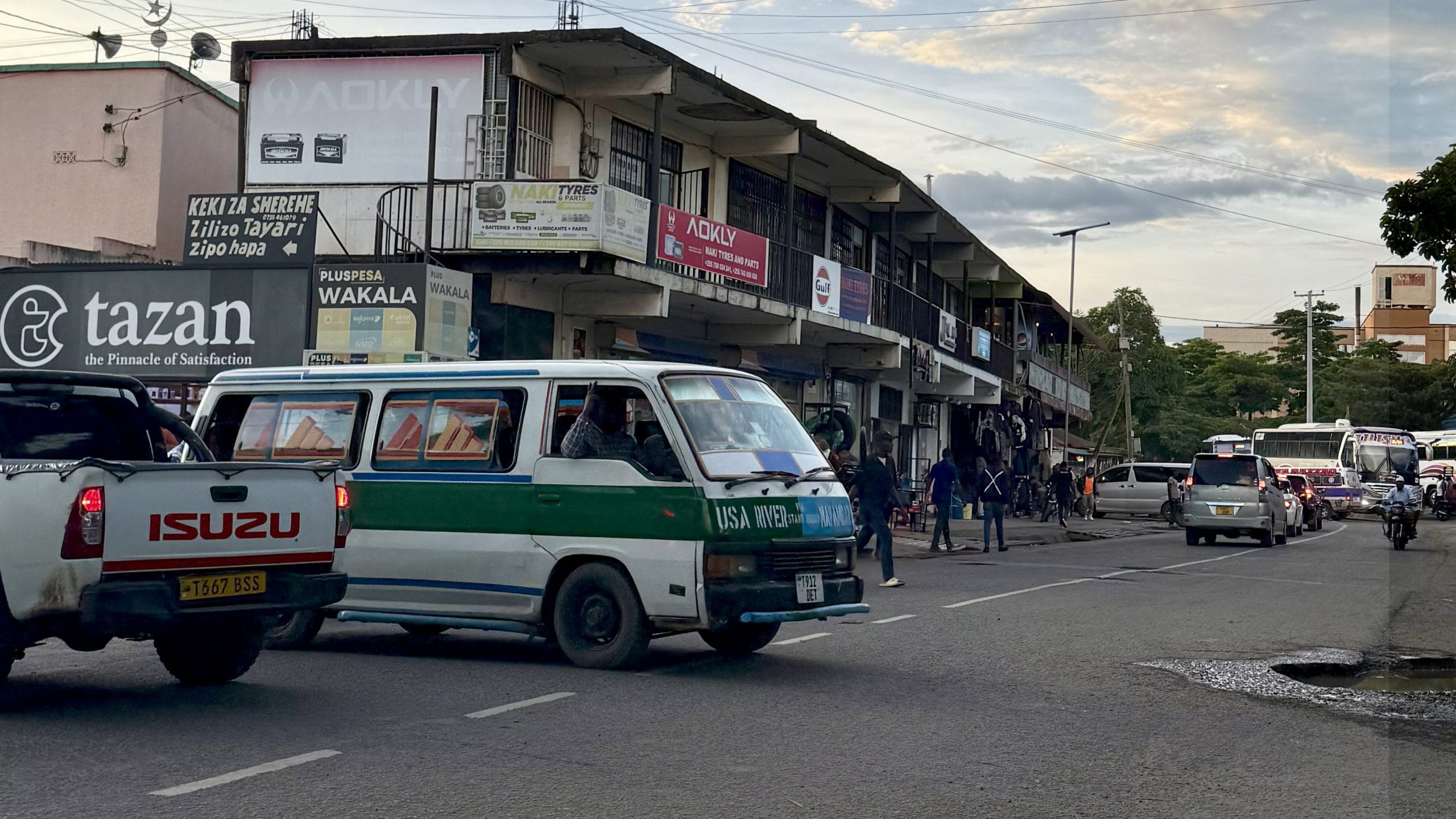
Dala-dalas: These are local minibuses and the cheapest way to get around. It’s an authentic, bustling, and often crowded experience! Best for the adventurous traveler.
Bajajis (Tuk-tuks): These three-wheeled scooters are a great middle-ground. Safer than a motorcycle taxi and perfect for short hops across town. Always agree on the fare before you get in.
Boda-bodas: Motorcycle taxis. They are fast and cheap but are the riskiest form of transport. If you use one, insist on a helmet.
Taxis: The safest and most comfortable option. Use licensed taxis and negotiate the price before starting your journey.
Pro tip: Negotiate taxi fares upfront – a Dar es Salaam ride to Kariakoo market might cost $5–$7 in daylight, but double at night.
Island life: getting to and around Zanzibar
Zanzibar’s spice-scented air and Swahili culture await, but getting there requires choices:
From Dar es Salaam:
Ferry: $35 for a 2-hour crossing on Azam or ZanFast ferries. Arrive 30 minutes early – delays happen!
Flight: A 20-minute hop for $100–$200. Airlines like Auric Air and ZanAir offer sunrise departures to beat heat.
Once on the island, you can explore Stone Town by bicycle (about $5/day) or by taxi ($15–$20/day). For beach-hopping, scooters are an option (around $25/day), but you’ll need a valid license—and careless driving can result in fines.
Travel tip: Ferry schedules vary with the season. Always double-check departure times at the terminal before heading to Zanzibar.
With a little planning, Tanzania’s transport becomes part of the adventure—not a challenge.
Ready for your Tanzanian journey?
Before chasing Serengeti sunsets or sharing jambo with the Maasai, secure your logistics. Avoid visa delays or cash crises—plan wisely!
Lock in your Tanzania e-visa online: $50 for single entry, $100 for multiple entries. Most travelers (140+ countries) apply in 15 minutes. Kenyans, South Africans, and 20+ nationalities enter visa-free. Process your application before packing.
Master the USD-TZS balance: Carry $100-$200 in crisp USD (pre-2013 notes) for emergencies. Use ATMs in Dar es Salaam or Arusha for TZS as rural areas only take cash. Split funds 60/40 USD/TZS. Swap dollars at official bureaux to avoid 10-15% “airport tax”.
For transport, skip overcrowded dala-dalas. Opt for Air Tanzania’s regional flights ($150+) or book private transfers through lodges.
To provide the best experiences, we use technologies like cookies to store and/or access device information. Consenting to these technologies will allow us to process data such as browsing behavior or unique IDs on this site. Not consenting or withdrawing consent, may adversely affect certain features and functions.
Functional
Always active
The technical storage or access is strictly necessary for the legitimate purpose of enabling the use of a specific service explicitly requested by the subscriber or user, or for the sole purpose of carrying out the transmission of a communication over an electronic communications network.
Preferences
The technical storage or access is necessary for the legitimate purpose of storing preferences that are not requested by the subscriber or user.
Statistics
The technical storage or access that is used exclusively for statistical purposes.The technical storage or access that is used exclusively for anonymous statistical purposes. Without a subpoena, voluntary compliance on the part of your Internet Service Provider, or additional records from a third party, information stored or retrieved for this purpose alone cannot usually be used to identify you.
Marketing
The technical storage or access is required to create user profiles to send advertising, or to track the user on a website or across several websites for similar marketing purposes.