Bush Wisdom: Hadzabe Kids Preserve Culture via Education
Ever watched a kid master a bow before they could write their name? Meet the Hadzabe children of Tanzania, where ancient traditions clash with modern threats. How do you teach survival skills to a generation caught between ancestral forests and concrete classrooms? This article dives into the hadzabe children education preserving culture paradox—revealing how tiny bows, oral histories, and carbon credits are rewriting their future without erasing their past. I saw a Hadzabe child track a gazelle near Lake Eyasi—it’s precision training, not play. With 90% land lost in 50 years, they’re fighting back: carbon credits fund education and protection. It’s a lifeline for culture and traditions—backed by eco-funds.
I’ll never forget the first time I saw a Hadzabe child with a tiny bow…
There I was, sipping warm chai near Lake Eyasi, when a five-year-old boy marched past me holding a bow almost as tall as him. His eyes? Locked on a flock of guinea fowl. Not a toy—his first lesson in survival. That’s the Hadzabe way: kids learn by doing, not by textbooks. This tribe of one of the last hunter-gatherer communities in Tanzania numbers just 1,300 souls. For 10,000 years, they’ve thrived by reading the land like we read novels.
But today, their story risks fading. Land grabs have stripped them of 90% of ancestral territory. Schools pop up near their camps, pushing desks over tracking skills. Yet here’s the twist: Hadzabe children education preserving culture isn’t a battle—it’s a dance. How do they keep ancient knowledge alive while letting kids learn math and English? How do you teach a child to navigate both the bush and bureaucracy? Let’s wander through their world, where lessons happen under baobab trees and homework means fetching honey from a beehive.
The bush as a classroom: how Hadzabe children learn
Learning by living, not by listening
Forget classrooms. For Hadzabe children, the savannah is their university. From age three, girls wield digging sticks alongside mothers to unearth tubers. Boys as young as five mimic uncles’ archery techniques with miniature bows. By seven, many identify 80+ plant species and craft hunting tools—a rite of passage when their first bow is carved from acacia wood.
Knowledge flows through demonstration, not instruction. A hunter might pause to let a child feel an antelope’s hoofprint in dust. Their click-filled Hadzane language preserves ancestral wisdom: tales of hunts or water-finding secrets are survival guides encoded in song. When elders chant about locust swarms predicting rains, they’re teaching weather patterns through rhythm.
The power of play and peers
Decoding animal tracks in dust
Fashioning bows and arrows with natural toxins
Stealing honey using smoke
Detecting water through soil clues
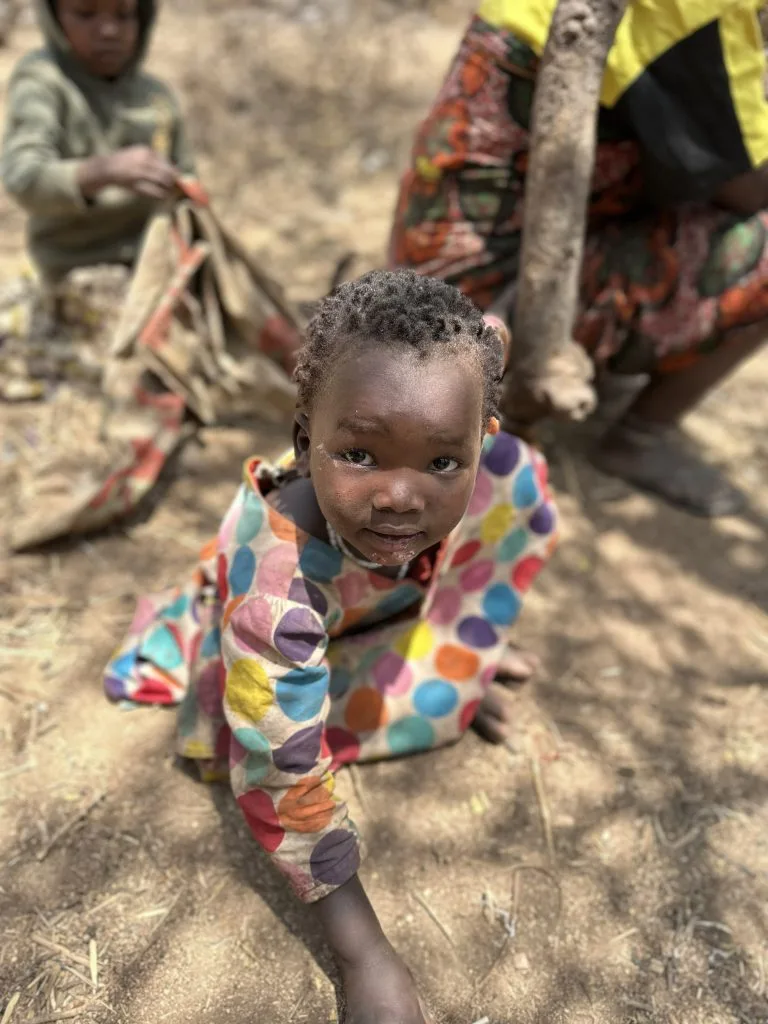
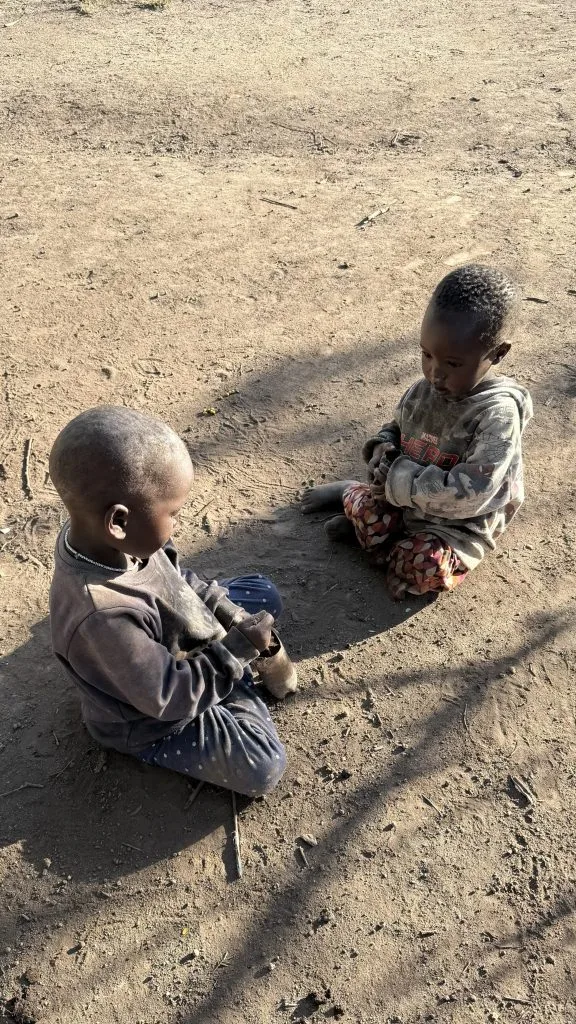
While Western kids play “house,” Hadzabe children build “mini-camps.” Older siblings teach archery; girls transform toxic berry lessons into competitions. A 12-year-old might correct a cousin’s spear-grip: “Grip tighter—this snap breaks dik-dik bones.” Their “play” feeds the family: boys hunt birds with pebbles, girls gather wild spinach, contributing daily calories through foraging.
Formal schooling now reaches Hadzabe communities through conservation funds, but elders negotiate fiercely. They push for bush skills in curricula—why should reading erase land-reading? Their diet depends on these skills: elders teach children to follow honeyguide birds to beehives. Every tuber or tracked gazelle becomes a lesson in sustainability—showing how ancient wisdom and modern education can coexist when cultures preserve their heritage.
A culture under pressure: the fight for land and identity
Losing their world, inch by inch
I’ve walked the cracked earth of Hadzabe territory, where the silence speaks louder than any statistic. Once, these lands echoed with the rhythm of bows and arrows. Now, 75-90% have vanished over 50 years. Why? The Datoga herders drive cattle through ancestral forests, chasing game away. The Sukuma farmers carve rows into sacred soil, planting beans where baobabs once stood. Imagine your home shrinking until only fragments remain – that’s their reality.
Each tree felled is a wound. Cattle trample water holes, polluting what’s left. The Yaeda Valley, once a haven, now hosts Datoga herders. I’ve seen Hadzabe elders trace maps in dust, pointing to lost acacia groves. Their children learn scarcity instead of abundance. This isn’t just land loss – it’s erasure of a 10,000-year-old relationship with earth.
The push for assimilation
Tanzania’s government calls it “progress.” To the Hadzabe, it’s a slow death. Since 1927, outsiders have demanded they plant crops, build permanent homes, abandon their wandering ways. But their identity isn’t tied to borders. When missionaries built villages in the 1960s, diseases like measles decimated communities. History repeats itself – forced assimilation kills more than traditions.
I met a Hadzabe elder who laughed bitterly: “They say we’re ‘backward’ for valuing freedom over farming.” Their oral histories warn against storing food – why plan harvests when the land provides? Yet schools teach children to write “farmer” in notebooks. The government’s 1970s villagization program? They called it “development,” but it fractured their world. Today, Hadzabe kids face a cruel choice: preserve survival skills or risk becoming outsiders in their own skin.
The formal school dilemma: opportunity or threat?
When I first visited a Hadzabe village, a boy answered my question about school with: “Today, I need to find honey with my cousins.” This moment revealed a cultural paradox I’ve pondered for years while witnessing their resilience.
A clash of two worlds
Trading the savanna’s infinite classroom for a concrete building feels like betrayal to the Hadzabe. Their ancestral lands in Tanzania’s Yaeda Valley face relentless encroachment. When mandatory schooling policies emerged decades ago, many children vanished into the bush. Elders recall how returnees spoke Swahili but forgot animal tracks.
For a people whose knowledge lives in the land, sitting at desks feels alien. Yet refusing school leaves them vulnerable during land negotiations or medical crises. It’s a lose-lose: too much erodes traditions, too little creates gaps. I once watched Juma, 14, translate a conservationist’s contract for his uncle – showing literacy can protect cultural rights, not just restrict traditions.
Weighing the pros and cons
Let’s dissect this balancing act:
Two Worlds of Learning: A Comparison
Feature
Traditional Hadzabe Education
Formal Western Education
Location
The natural environment (bush, savanna)
Classroom
Curriculum
Survival skills (hunting, foraging), oral history, social values
Cultural continuity and survival within the community
Integration into the national/global economy and society
Here’s the truth: Hadzabe children collect 25-50% of their daily food by age 6 through practice, not textbooks. Yet land deals demand written contracts – suddenly classroom math becomes vital. The community’s solution? Using carbon credit payments from conservation projects (protecting 57,000 acres) to fund school fees. Their message? “We’ll master your world’s tools, but keep ours.”
Forging a new path: community-led preservation
Let me tell you a story that will make you believe in humanity’s capacity to adapt and thrive. The Hadzabe aren’t just surviving—they’re rewriting the rules of what’s possible for indigenous communities worldwide.
Securing the land, securing the future
Picture this: a people with a 10,000-year-old connection to their land, suddenly facing extinction by land grabs. In 2011, everything changed. With UCRT’s help, they secured 57,000 acres of ancestral territory through Tanzania’s first-ever CCRO. This wasn’t just paper—it was a lifeline. No land, no culture. No land, no survival. Simple as that.
But here’s the twist—they didn’t stop there. By 2016, they’d expanded protection to 590,000 acres. Imagine generations of Hadzabe kids growing up knowing their grandparents didn’t just fight for this land—they won it legally. That’s how you build intergenerational resilience.
From carbon credits to classrooms
Now for the mind-blowing part: they turned carbon credits into school fees. Partnering with Carbon Tanzania, they protected forests while generating over $300,000. But here’s the kicker—they’re not hoarding the cash. They’re reinvesting in their children’s future, proving education doesn’t have to erase culture—it can amplify it.
Paying school fees for dozens of Hadza students, giving them a choice
Training and equipping community game scouts to protect their land and wildlife
Improving local health clinics for better community well-being
Funding the expansion of forest protection programs
This isn’t charity—it’s strategic genius. Their carbon project didn’t just earn them the 2019 Equator Prize; it gave them a blueprint for sustainable autonomy. Think about it: every dollar earned from protecting forests becomes a dollar invested in preserving their identity.
When you see Hadza rangers tracking elephants while checking GPS devices, you realize this isn’t a clash between old and new—it’s a masterclass in balance. They’ve shown the world what’s possible when communities lead their own solutions. Now that’s a legacy worth protecting.
The future of Hadzabe children: a balancing act
That little boy with his bow wasn’t just playing at being a hunter—he was learning to survive. Today, Hadzabe children navigate two worlds: one of ancestral wisdom, the other of classroom chalkboards. Their challenge? Keeping both alive.
More than a choice: building a bridge
For the Hadzabe, education must blend heritage with modernity. The UNESCO CyberTracker project proves it: children document wildlife digitally while preserving oral histories. Their natural learning style—observing, participating, sharing—is honored, not erased, by classrooms that respect tradition. Elders guide them, while apps help map animal trails, merging tech with their click-based language.
How you can be a part of the solution
Travelers shape this future. Choose wisely:
Ethical tour operatorsensuring income stays local—like those funding Carbon Tanzania’s forest protection projects and school fees.
Ask before photographing children—curiosity shouldn’t override dignity. A quick smile and question build trust.
Bring notebooks from your packing list instead of sweets. Schools in Yaeda Valley use these supplies to teach both literacy and plant knowledge.
The Hadzabe aren’t relics—they’re innovators. By defending land rights and using tech like CyberTracker, they’re crafting a future where survival skills and modern tools coexist. That boy with the bow? He might grow up to track lions and code apps. Now, that’s a future worth investing in.
When I first saw a Hadzabe child with his tiny bow, I glimpsed tradition—and a future. The Hadzabe aren’t relics; they’re crafting resilience through every arrow, every forest guarded, every child bridging worlds. Their struggle isn’t just survival—it’s a lesson in balance. Choose ethical tours like [this one](https://www.african-safari-tanzania.com/tribes-of-tanzania/hadzabe-hunting-tribe-life-experience/)—root for a culture rewriting its story.
To provide the best experiences, we use technologies like cookies to store and/or access device information. Consenting to these technologies will allow us to process data such as browsing behavior or unique IDs on this site. Not consenting or withdrawing consent, may adversely affect certain features and functions.
Functional
Always active
The technical storage or access is strictly necessary for the legitimate purpose of enabling the use of a specific service explicitly requested by the subscriber or user, or for the sole purpose of carrying out the transmission of a communication over an electronic communications network.
Preferences
The technical storage or access is necessary for the legitimate purpose of storing preferences that are not requested by the subscriber or user.
Statistics
The technical storage or access that is used exclusively for statistical purposes.The technical storage or access that is used exclusively for anonymous statistical purposes. Without a subpoena, voluntary compliance on the part of your Internet Service Provider, or additional records from a third party, information stored or retrieved for this purpose alone cannot usually be used to identify you.
Marketing
The technical storage or access is required to create user profiles to send advertising, or to track the user on a website or across several websites for similar marketing purposes.